

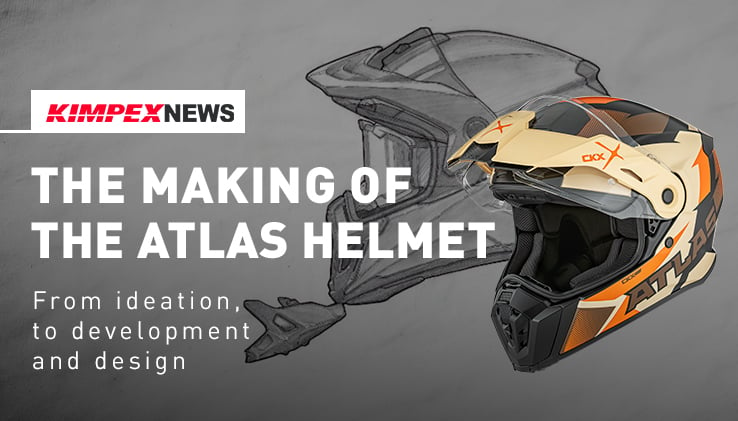
The Atlas adventure helmet started with a simple idea: create a motorcycle helmet truly designed for the realities of North American riders, both on the road and out on the trails.
Why develop a new adventure helmet
From the very beginning, the CKX team identified clear expectations: high comfort, effective ventilation, strong modularity, a wide field of view, and top-level safety. Building on their expertise in winter helmets, they set out to adapt that knowledge into an adventure helmet designed to perform in warm-weather conditions.
The goal was straightforward: to develop a premium adventure helmet that could compete with leading brands on the market, while remaining accessible and capable of performing in demanding environments, such as heat, dust, and long-distance rides.
Identifying the need
Feedback from dealers and qualitative research with riders quickly confirmed the project’s direction.
|
To stand out in the adventure motorcycle helmet market, the Atlas needed to deliver:
|
|
Riders also expected practical features like removable cheek pads, a durable visor, and effective fog management. These real-world needs became the foundation of the helmet’s design.
Project goals
Initially, the goal was to integrate proven winter helmet technologies into an adventure helmet. But the ambition quickly grew: develop a helmet that could establish itself in both the Canadian and U.S. markets, delivering top performance on and off-road.
Key development priorities included:
- Optimized airflow and ventilation
- Weight reduction without compromising safety
- Dedicated space for communication systems
- Comfort validated in hot conditions
- Reduced aerodynamic noise
- Solutions to manage dust and fog
- Competitive pricing
Development timeline
The project officially began on May 1, 2019.
Key milestones included:
- December 2019: dealer survey
- October 2020: consumer research study
- November 2020: start of industrial design
- Mid-May 2021: final design validation using 3D printing
From there, the team moved through detailed design, prototyping, field testing, technical adjustments, certification, and production preparation. Developing a motorcycle helmet takes years of iteration, testing, and refinement, not just a few months.
From concept to prototype
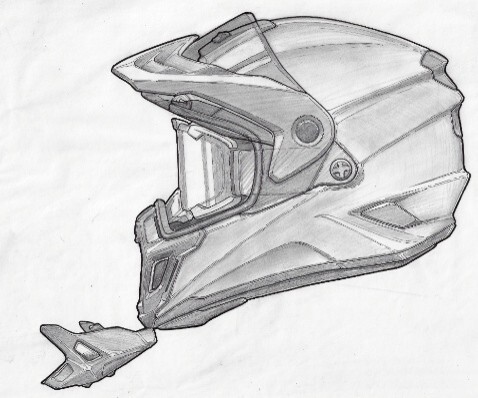
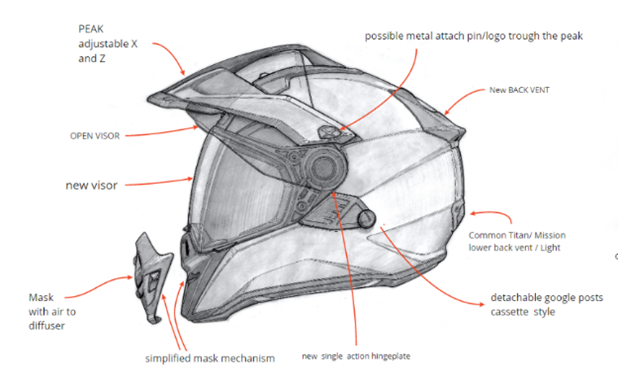
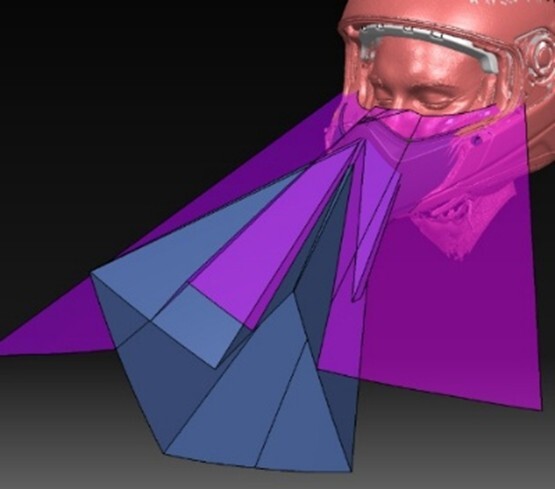
Early development focused on the helmet’s silhouette, field of view, peak integration, and air intake positioning.
|
Technical choices were then refined:
|
|
Every decision was made with one goal in mind: to create a versatile adventure helmet that performs equally well on the road and off-road.
Rider expectations
The riders involved in the research were experienced and passionate, logging long distances every season.
Their expectations were clear:
- All-day comfort, even on long rides
- A precise fit with no pressure points
- A lightweight, well-balanced feel
- Effective airflow
- A durable, scratch-resistant visor
The peak was also considered essential, especially for off-road riding.
Dealer insights
Dealers reinforced the same priorities: ventilation, fog management, modularity, comfort, and a fair price point.
|
They also emphasized:
|
|
These insights helped validate the Atlas helmet’s market positioning.
Design and engineering
The Atlas helmet was developed through close collaboration between designers and engineers.
Early work included exploratory sketches to define:
- The helmet’s overall shape
- The field of view
- Peak integration
- Air intake placement
From there, technical development was refined:
- Designing a lightweight yet durable shell
- Building an optimized ventilation system
- Creating a distortion-free visor
- Integrating tool-free modular components
The interior was also redesigned to improve comfort, moisture management, and noise reduction.
Prototyping, testing, and validation
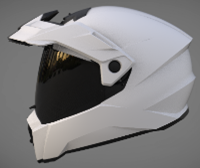
The Atlas went through multiple validation cycles:
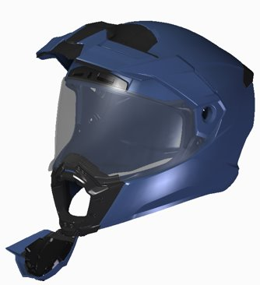
- 3D-printed models to test fit and volume
- Functional prototypes
- Mechanical and impact testing
- Airflow and acoustic testing
- Real-world on-road and off-road testing
|
|
|
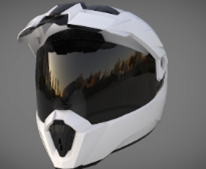
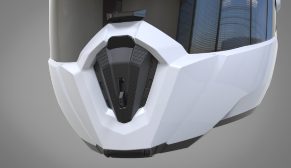
Each phase led to tangible improvements, from adjusting airflow angles to refining foam density and reinforcing key areas of the shell. The goal was simple: ensure that lab performance translates into real benefits for riders.
Certification and Production
Before launch, the Atlas helmet had to meet multiple safety standards, including DOT and ECE 2206, depending on the market.
Production includes:
- Shell manufacturing
- Component assembly
- Ventilation system integration
- Strict quality control processes
What sets the Atlas apart
The Atlas stands out due to:
- Tool-free modularity
- An expanded vertical field of view
- All-day comfort for long rides
- Advanced ventilation
- A well-balanced combination of light weight and durability
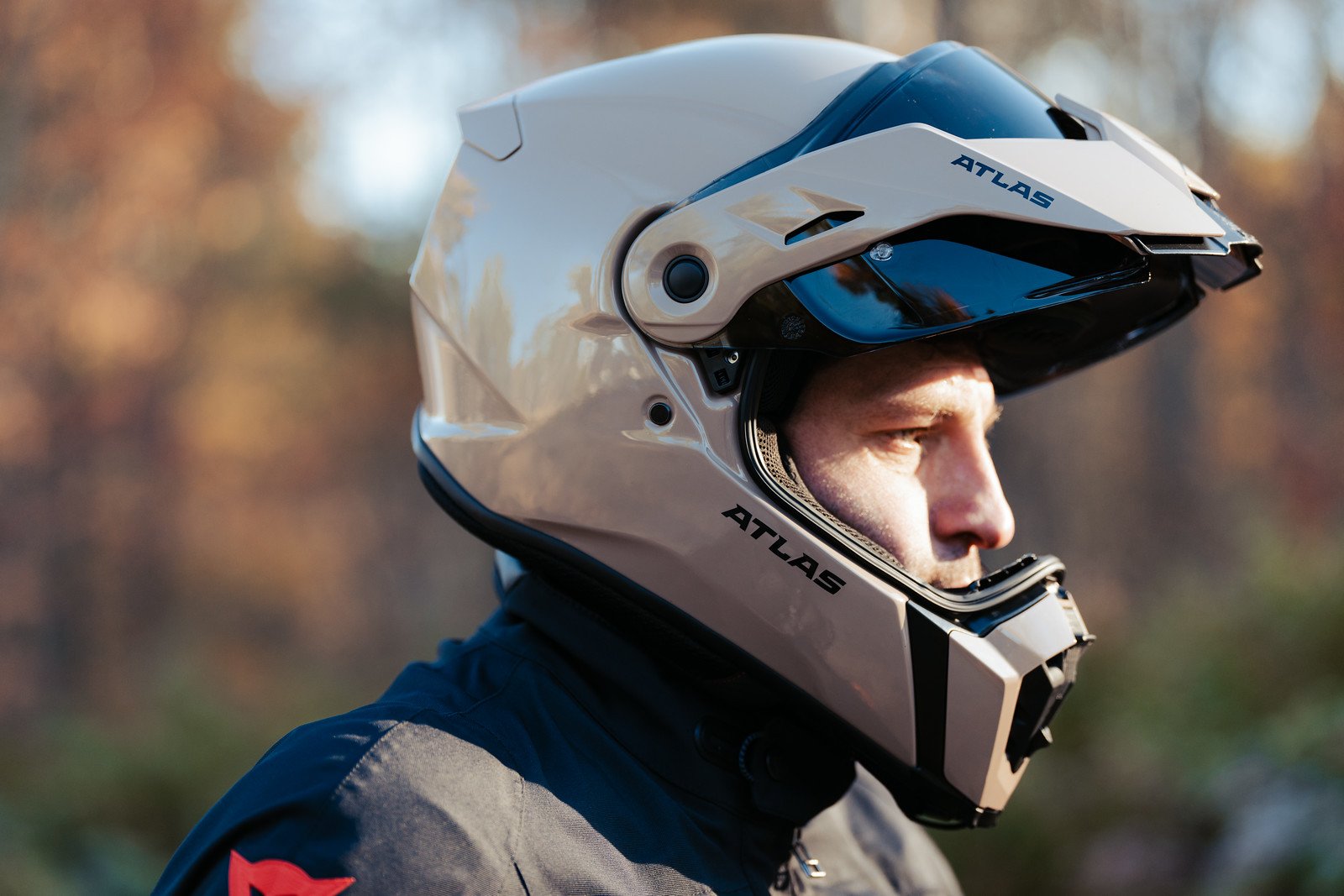
The result: a versatile, high-performance adventure helmet designed to meet the real-world demands of riders.
To learn more about the Atlas :
https://www.youtube.com/watch?v=PLV0qZFmymw&t
https://blog.kimpex.com/ckx-atlas-adventure-motorcycle-helmet
https://www.youtube.com/watch?v=ogQa0-ujHHw





